22 Pounds of Acorns a Day: Inside Montanera Season
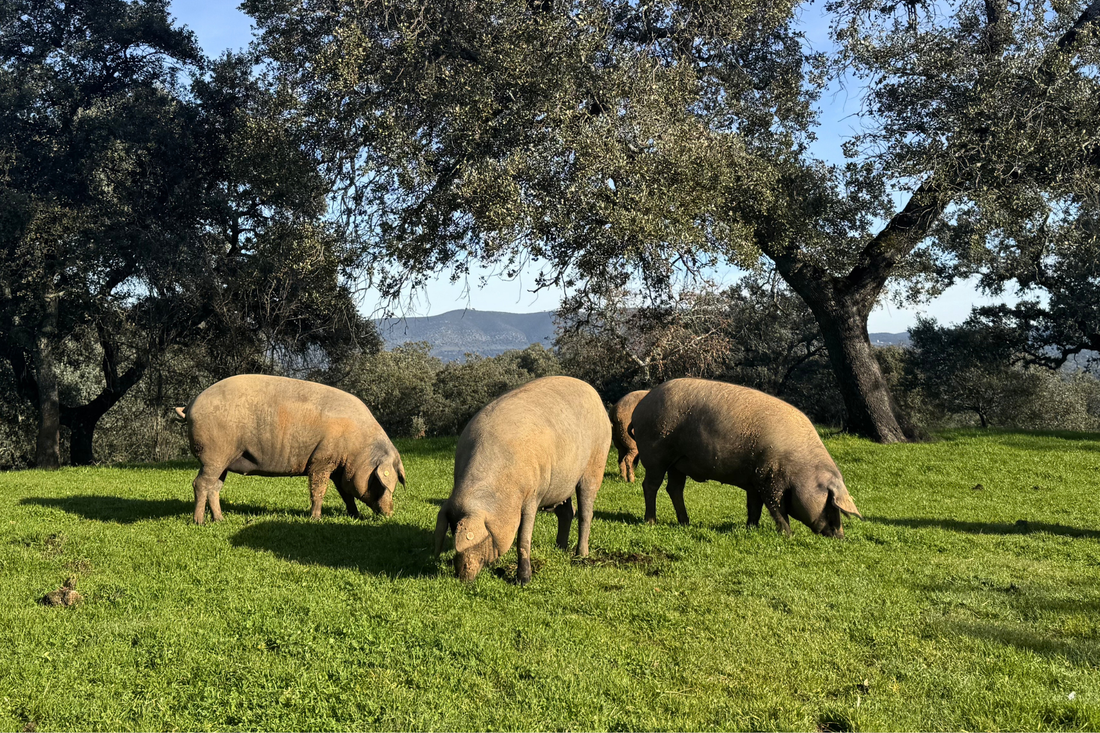
Most people think of pork as something raised quickly, in tight spaces, with little connection to the land around it. Ibérico pork is different. Part of that difference comes from genetics: Ibérico pigs are a special breed, known for their ability to develop rich marbling and flavorful fat. But genetics are only part of the story. The other part is lifestyle, and when we talk about the lifestyle of Ibérico pigs, two things matter most: the landscape and the season.
The landscape is called the Dehesa. The season is called Montanera. Together, they create one of the most unique pork traditions in the world.
What is Montanera?
Montanera is the final stage of the Ibérico pig’s life, usually from October to March, when the pigs roam freely through the Dehesa, feeding on fallen acorns, wild grasses, and other natural resources from the land. This natural grazing period is when they can nearly double their weight, while moving constantly through open pasture under the oak trees.
During Montanera, one Ibérico pig can eat up to 22 pounds of acorns a day. That is not a typo. Twenty-two pounds. Every day. Over the course of the season, tens of thousands of acorns are eaten by a single animal, in one of the most unique farming landscapes in the world.
Montanera is often described as the final fattening season for Ibérico pigs, but it is not “fattening” in the way most people imagine. The pigs are not standing still in a feedlot. They are moving constantly across open land, grazing under oak trees, foraging naturally, and covering long distances every day. In fact, Ibérico pigs can walk over 10 miles a day during this season.
That movement matters. It helps develop the texture of the meat, while the acorn-rich diet helps shape the flavor and quality of the fat.
Why Acorns Matter So Much
Acorns are central to what makes Ibérico pork so different. During Montanera, Ibérico pigs eat thousands of acorns, along with wild grasses and other natural vegetation. Acorns are naturally high in oleic acid, the same fatty acid found in olive oil.
That diet helps create the soft, flavorful fat Ibérico is known for. It is why the marbling melts so beautifully when cooked, and why the meat has a nutty, rich, almost savory-sweet depth. In simple terms, the pigs eat differently, move differently, and live differently, so the pork tastes different.
What Is the Dehesa?
To understand Montanera, you also need to understand the Dehesa. At first glance, the Dehesa might look like a natural forest, but it is not. It is actually one of the oldest and most sophisticated farming systems on earth, shaped by human hands over thousands of years.
Found only in the southwest of the Iberian Peninsula, the Dehesa is a man-made ecosystem where oak trees are spaced apart for both maximum acorn production and open pasture for grazing. It is not just beautiful; it is functional. The oak trees provide acorns, the open pasture gives animals room to roam, and the whole system supports a more natural rhythm between land, animals, and farmers.
The Space Required for Montanera
One of the biggest differences between Ibérico de Bellota (acorn fed) and most pork production is the amount of space required. To qualify as Ibérico de Bellota, Spanish law requires at least 2.5 acres of Dehesa per pig.
That space is part of the quality of the product. Without enough land, there would not be enough acorns. Without enough acorns, there is no true Montanera. And without Montanera, there is no Ibérico de Bellota. The pigs have room to roam, forage, and live alongside other animals like cattle and sheep, which is a very different picture from what most people imagine when they think about pork production.
A System Built on Patience
Montanera is not something that can be faked or rushed. The Dehesa itself takes generations to maintain, and oak trees can take 50 to 100 years to reach full acorn-producing maturity. That means this system depends on long-term care. Farmers are not just thinking about this year’s harvest; they are managing a landscape that has to keep producing for decades.
It is an ecosystem built on care and patience, meant to benefit generations to come. That patience is part of what makes Ibérico de Bellota so special. It is not simply pork from Spain. It is pork from a specific animal, raised in a specific ecosystem, during a specific season, under strict rules.
That is Montanera: ancient land, acorn season, total freedom, and zero shortcuts.