Apple Cider-Braised Ibérico Pork Collar 'Coppa' with Roasted Butternut Squash Mash
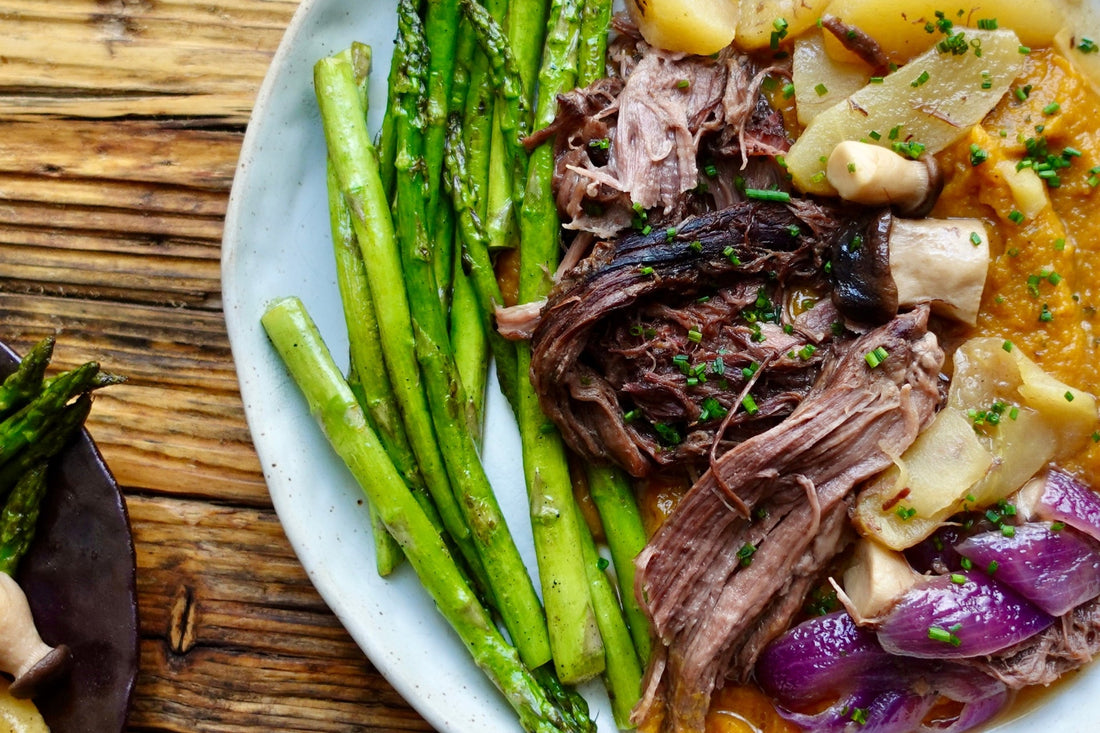
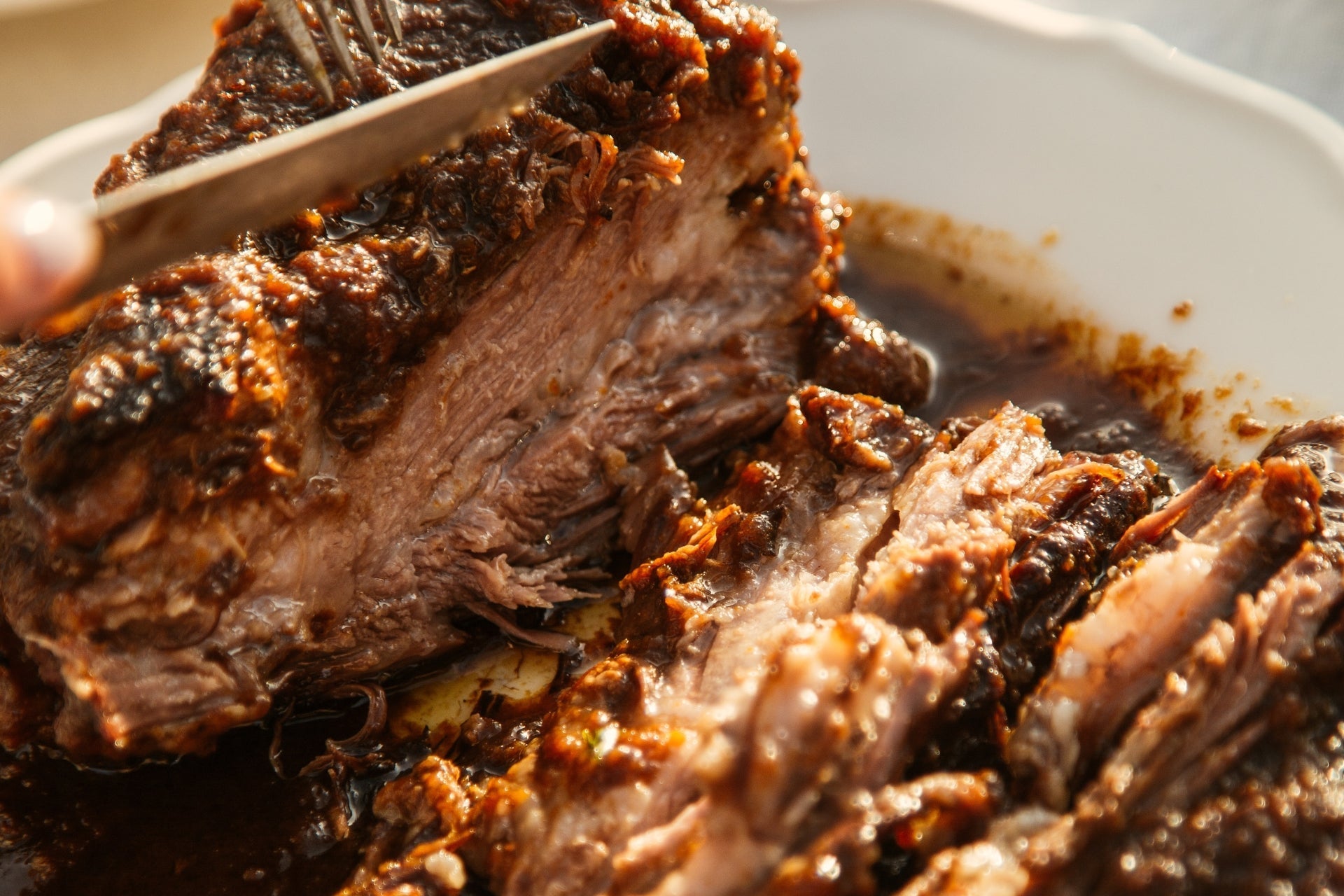
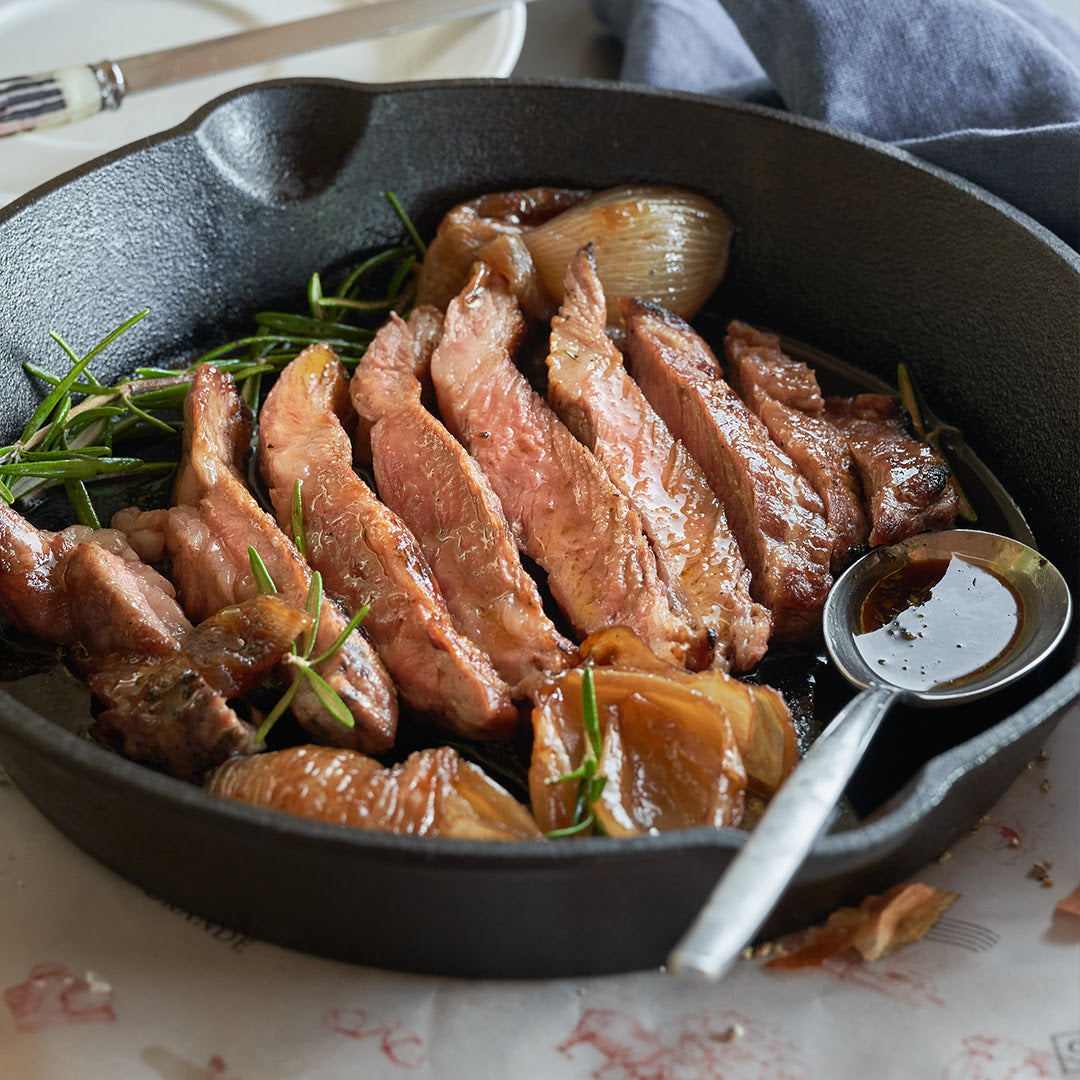
A cozy fall recipe with tender, slow-braised Ibérico pork, sweet apple cider, and creamy roasted butternut squash. As the days get cooler, this is the kind of dish that makes you want to slow down and gather around the table. Rich, beautifully marbled Ibérico pork collar is braised in apple cider and beef stock until fall-apart tender, with apples, shallots, and mushrooms soaking up all those incredible flavors. A silky roasted butternut squash mash brings natural sweetness and warmth, while crisp, pan-seared asparagus adds a fresh finish. Comfort food with a Spanish soul, made for fall.

Recipe for Apple Cider-Braised Ibérico Pork Collar 'Coppa' with Roasted Butternut Squash Mash
ingredients
For the Apple Cider-Braised Pork Collar
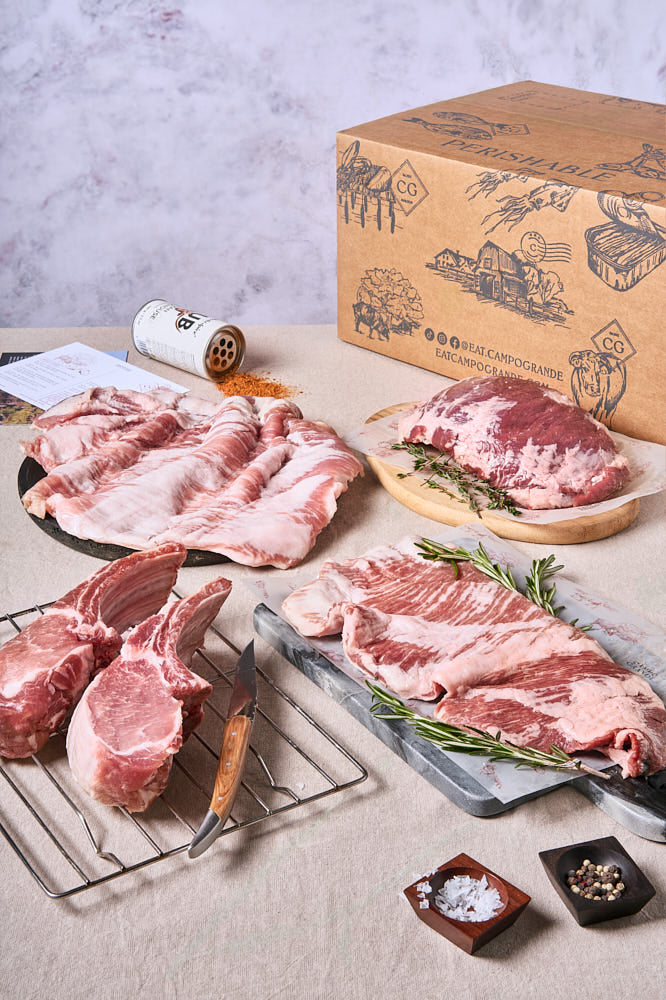
- 1 pack of Ibérico pork collar ‘coppa’, cut into 4 large pieces
- 1 teaspoon flaky sea salt, plus more to taste
- 1 teaspoon freshly ground black pepper
- 4 garlic cloves, peeled
- 3 tablespoons all-purpose flour
- 1 tablespoon olive oil
- 2 cups apple cider
- 2 cups beef stock or bone broth
- 2 tablespoons honey
- 2 red onions or 4 shallots, quartered
- 2 medium apples, cored and cut into wedges
- 8 ounces mushrooms, halved or quartered, depending on size
For the Roasted Butternut Squash Mash
- 1 medium butternut squash, approximately 2 pounds
- 1 whole head of garlic
- 2 tablespoons olive oil
- 1 teaspoon flaky sea salt
- ½ teaspoon freshly ground black pepper
- ¼ teaspoon chili flakes, optional
- ¼ teaspoon ground nutmeg or your favorite warming spice blend, optional
- ¼–½ cup braising liquid, as needed
For the Asparagus
- 1 pound fresh asparagus, trimmed
- 1 tablespoon olive oil
- ½ teaspoon flaky sea salt
- ¼ teaspoon freshly ground black pepper
Preparation
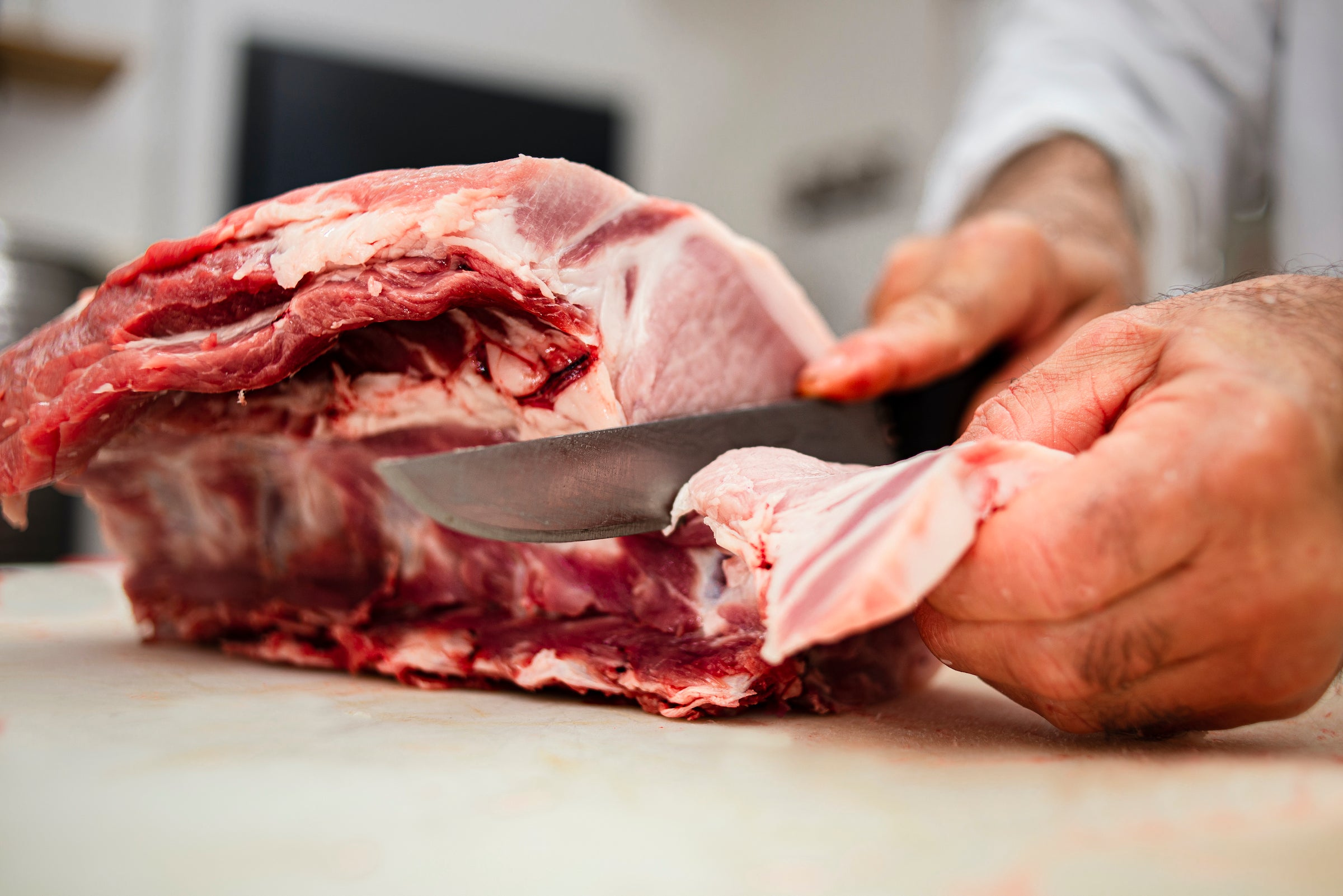
- Season and Prepare the Pork: Preheat the oven to 325°F. Pat the pork collar dry with paper towels. Cut it into four large pieces and season all over with flaky sea salt and freshly ground black pepper. Make a few small incisions in each piece and insert the garlic cloves into the meat. Lightly coat all sides with flour, shaking off any excess.
- Sear the Pork: Heat the olive oil in a heavy Dutch oven over medium-high heat. Once hot, add the pork and sear on all sides until deeply golden brown, about 3–4 minutes per side. Work in batches if necessary to avoid overcrowding the pot. The pork will release plenty of its own fat, so you only need a small amount of oil. This step develops the Maillard reaction, creating a rich, caramelized crust and building the flavorful base for the braising liquid.
- Braise in Apple Cider: Pour in the apple cider and beef stock, scraping the bottom of the pot with a wooden spoon to release all the browned bits. Add the honey and stir to combine. The liquid should come approximately halfway to two-thirds of the way up the pork. Add a little extra stock if needed. Bring to a gentle simmer, then cover with the lid and transfer to the oven. Braise for approximately 2½–3½ hours, turning the pork once or twice, until it is fork-tender. For the best fall-apart texture, aim for an internal temperature of approximately 200–205°F.
- Add the Apples, Onions, and Mushrooms: About 30–40 minutes before the pork is done, add the quartered red onions or shallots, apple wedges, and mushrooms to the Dutch oven. Stir them gently into the braising liquid, then cover and return the pot to the oven. Cook until the vegetables are tender but still hold their shape and the pork easily pulls apart with a fork. Remove the Dutch oven from the oven. Transfer the pork and vegetables to a plate, keeping them warm. If the braising liquid is too thin, simmer it uncovered on the stovetop for a few minutes to concentrate the flavors.
- Roast the Butternut Squash and Garlic: While the pork braises, increase the oven temperature to 400°F when convenient, or roast the squash separately if oven space allows. Cut the butternut squash lengthwise into quarters and remove the seeds. Arrange the pieces on a baking sheet, drizzle with olive oil, and season with salt and freshly ground black pepper. Cut the top off the garlic head to expose the cloves, drizzle with a little olive oil, and wrap it in aluminum foil. Place it on the baking sheet alongside the squash. Roast for 40–55 minutes, or until the squash is deeply golden and completely tender when pierced with a knife. If the squash browns before it softens, loosely cover it with aluminum foil and continue roasting. Allow it to cool slightly, then scoop the flesh into a food processor. Squeeze the roasted garlic cloves from their skins and add them to the squash. Blend until smooth and creamy. For a looser texture and extra flavor, gradually add ¼–½ cup of the pork braising liquid. Season to taste with additional salt and pepper. For a little extra warmth, add chili flakes or a pinch of nutmeg.
- Sear the Asparagus: Heat a large skillet or grill pan over medium-high heat. Toss the trimmed asparagus with olive oil, salt, and black pepper. Cook for 4–6 minutes, turning occasionally, until lightly charred and tender-crisp. The asparagus should retain a little bite to balance the rich, slow-braised pork and creamy squash mash.
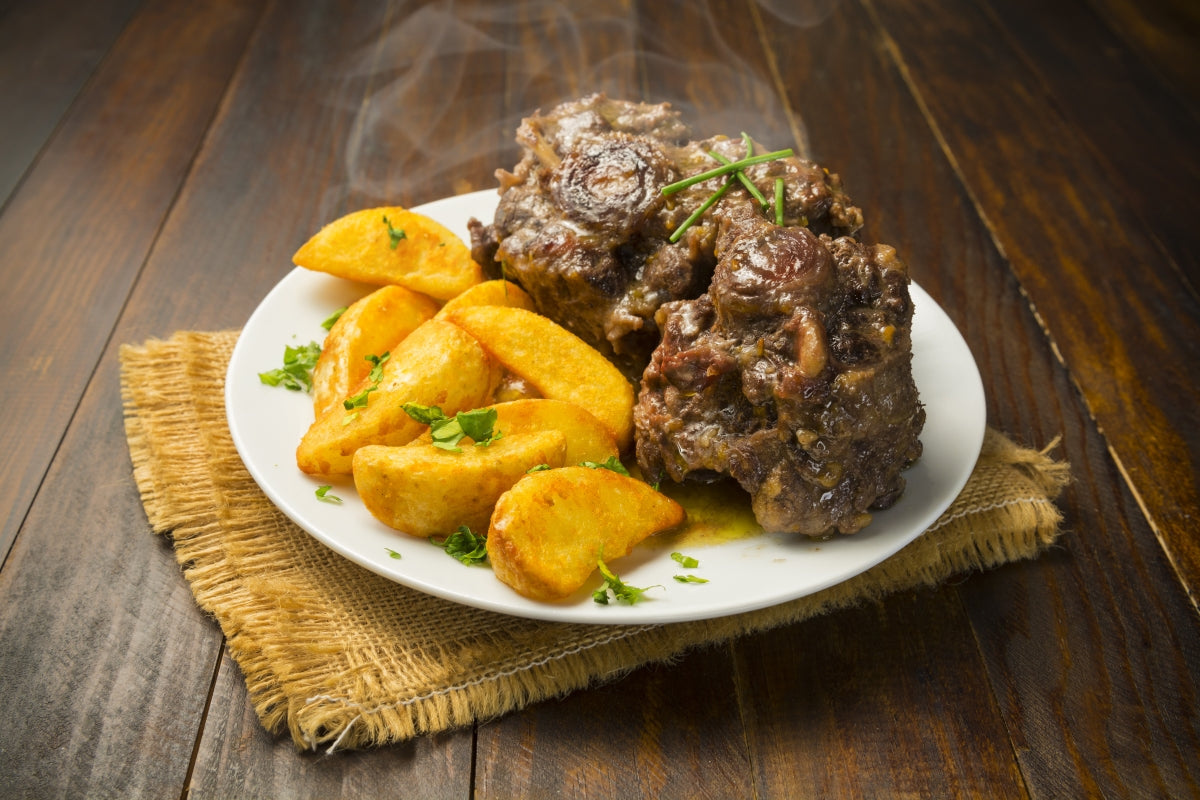
- Plate and Serve: Spoon a generous layer of roasted butternut squash mash onto each plate. Pull the pork collar apart and arrange it over the mash. Add the roasted apple wedges, onions, and mushrooms around the pork, then spoon over a little of the reduced braising liquid. Serve the asparagus alongside and finish with freshly ground black pepper and a drizzle of good extra-virgin olive oil, if desired.