Ractopamine: The Glyphosate of Pork
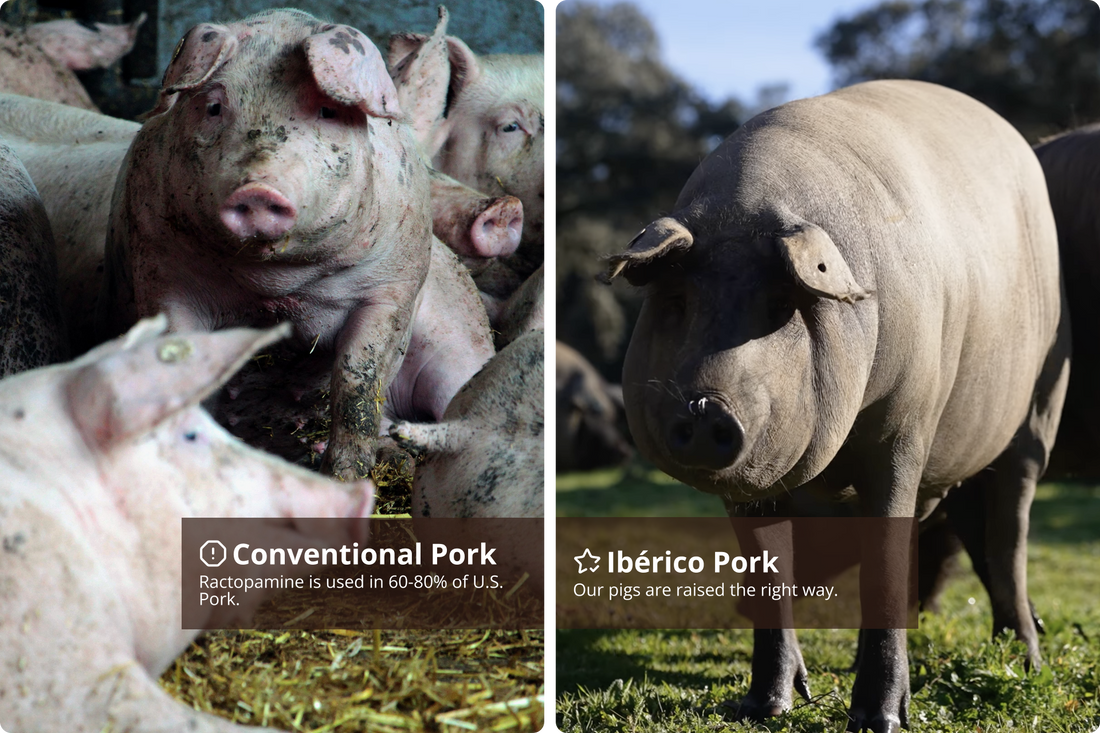
Ractopamine is a synthetic drug fed to pigs in the final weeks before slaughter. It's been used in conventional pork production for decades. And most people eating pork today have no idea it exists. In this post, we're breaking down what it is, why it raises concerns, and why you'll never find it in Campo Grande pork.
How It's Used
Ractopamine is marketed to farmers under the trade name Paylean, and it's administered through feed, meaning no injection, no prescription, and no veterinarian oversight required. Its job is simple: bulk up the animal fast, reduce fat, and get more muscle out of every pound.
A whopping 60 to 80% of conventionally raised pigs in the United States are fed ractopamine. That's not a fringe practice. That's the standard.
Why So Many Countries Have Banned It
Roughly 160 countries have banned or severely restricted ractopamine, including the entire European Union, China, Russia, and Taiwan. Their reasoning comes down to two things: animal welfare and human health concerns.
On the animal side, ractopamine works by mimicking stress hormones. It essentially keeps the animal in a prolonged, heightened stress state in order to redirect energy toward muscle growth. The result is a pig that is more restless, more fearful, and more aggressive than it would otherwise be. Physically, the effects are significant too. The FDA's own data shows ractopamine has been responsible for more adverse reports than any other livestock drug on the market, over 160,000 documented cases of sickened or dead pigs. Known physical effects include lameness, broken limbs, cardiovascular problems, and higher rates of injury and death during transport to slaughter.
On the human side, the picture is murkier, and that's part of the concern. The only formal human study on ractopamine's effects involved six healthy young men. One dropped out early after experiencing adverse health effects. That study, based on five completed participants, remains the primary data used to establish safety standards. European food safety authorities have separately raised concerns around elevated heart rates and cardiovascular damage from ractopamine residues in food. And a Consumer Reports investigation of 240 pork products found that one in five tested positive for those residues, meaning exposure is not hypothetical for people eating conventional pork regularly.
We're not here to tell you ractopamine will definitely hurt you. The honest truth is that the long-term studies simply haven't been done. And for a lot of people, that's reason enough to be cautious about where their pork comes from.
How We Do Things at Campo Grande

Our Ibérico pigs are never given ractopamine. Not because we have to avoid it, but because everything about the way we raise our animals is incompatible with what it represents.
Our pigs grow slowly. They eat a natural diet of grains, grasses, and acorns. No synthetic growth promoters. No shortcuts.
Ractopamine exists to solve a problem our pigs simply don't have: the pressure to grow as fast as possible for as little cost as possible. That's not our model. It never has been. And the result is cleaner, better, more flavorful pork, the way it was always meant to taste.
The Bottom Line
Ractopamine is a drug banned by most of the world, with limited human safety data and documented animal welfare concerns. Choosing where your pork comes from is one of the simplest ways to opt out of it entirely.
Sources
- National Center for Biotechnology Information (NCBI)
- Center for Food Safety
- Compassion in World Farming (CIWF)
- Consumer Reports